
 USD
USD

Casebinders
Top Tab Casebinders
Top tab casebinders are built for organizing legal files in strict chronological order. Designed for drawer filing systems, these folders feature a double-thick back and a flap-style fastener that secures documents while keeping the first page immediately visible. They hold up to 2 inches of paperwork and are ideal for legal briefs, case notes, and court filings. Available in letter or legal sizes, all casebinders are made in the U.S.A. and compatible with filing cabinet drawers. Add labels and accessories to customize your system and improve organization.
Sub Categories


Advanced Filing Concepts
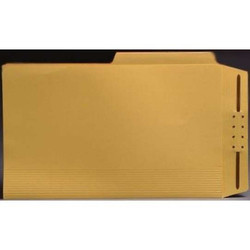
Top Tab Casebinder Folders, Legal Size, 14pt, 2 Expansion, 50/Box
Advanced Filing Concepts
Top Tab Casebinder Folders, Legal Size, 14pt Yellow, 2" Expansion, 50/Box
Top Tab Casebinder Folders for Chronological Drawer Filing
Top tab casebinder folders are designed for organizing legal documents, case records, court filings, and other multi-page files in chronological order. A flap-style fastener secures punched documents while allowing the first page of the file to remain immediately visible when the folder is opened.
These casebinders are made for drawer filing systems, including standard file cabinets, desk drawers, and compatible lateral file drawers where labels are viewed from above. Their reinforced construction and double-thick back provide added support for files that are reviewed, updated, transported, and refiled frequently.
Available in letter and legal sizes, top tab casebinders can hold up to 2 inches of paperwork depending on the model. They are commonly used for legal briefs, pleadings, court filings, case notes, correspondence, contracts, exhibits, and other records that need to remain securely bound in a defined sequence.
What Is a Casebinder Folder?
A casebinder is a specialized file folder that combines the labeling and storage format of a top tab folder with a binding-style fastener for punched documents. Instead of storing papers loosely inside the folder, documents are attached to the flap fastener and kept in a consistent order.
The flap-style design allows users to turn through documents while keeping the file secured. Because the first page remains visible when the folder is opened, staff can quickly identify the document set without removing papers from the fastener.
- Top tab construction: Keeps the identifying label visible in drawer-filing systems.
- Flap-style fastener: Secures punched documents in chronological or another defined order.
- Visible first page: Allows the opening document to be reviewed without removing the file contents.
- Double-thick back: Provides added support for large document sets and repeated handling.
- Up to 2-inch capacity: Accommodates substantial legal, administrative, and case-related paperwork.
When Should You Use a Top Tab Casebinder?
Casebinder folders are a strong choice when documents must remain securely attached and arranged in a strict sequence. They are especially helpful for records that are reviewed from the first page forward and updated as new documents are received.
- Choose casebinders when legal or case documents need to remain in chronological order.
- Choose them for active files that are reviewed, updated, transported, and returned to storage frequently.
- Choose letter-size casebinders for standard 8-1/2" x 11" briefs, correspondence, forms, and reports.
- Choose legal-size casebinders for 8-1/2" x 14" court filings, contracts, legal forms, and longer documents.
- Choose higher-capacity models when the file is expected to grow to a substantial document thickness.
- Choose top tab casebinders when the records will be stored in file cabinet drawers rather than on open shelves.
How to Choose Top Tab Casebinder Folders
Letter-size casebinders are designed for standard 8-1/2" x 11" documents. Legal-size casebinders accommodate 8-1/2" x 14" contracts, court records, real estate paperwork, legal forms, and other longer documents.
Review the maximum filing capacity before ordering. Some casebinders hold up to 2 inches of paperwork, making them suitable for lengthy cases, briefs, filings, and records that accumulate documents over time.
The flap-style fastener secures punched documents while allowing pages to be turned and reviewed in sequence. Confirm the fastener configuration matches the way your documents are punched and maintained.
Check the top tab style and available labeling area. The tab may need to display a client name, case number, court, matter description, year, account number, or other identifying information.
A reinforced or double-thick back provides additional support for files containing large document sets. This construction is useful when records are handled or transported frequently.
These top tab casebinders are intended for drawer filing. Confirm the folder size, tab orientation, drawer depth, and available filing space before ordering.
How the Flap-Style Casebinder Fastener Works
A flap-style fastener holds punched documents together along one edge of the file. The papers remain secured while users turn through the record in sequence, similar to reviewing pages in a bound file.
- Maintains chronological order: Documents can be arranged from oldest to newest or according to an established filing procedure.
- Keeps the first page visible: The opening document remains easy to see when the casebinder is opened.
- Reduces loose paperwork: Attached pages are less likely to fall out or become mixed with another case.
- Supports ongoing updates: Additional punched documents can be added as the case or matter develops.
- Simplifies review: Staff can turn through the file without removing every document from the folder.
Follow your organization’s established document-ordering procedure when adding new paperwork so the sequence remains consistent throughout the file.
Benefits of Top Tab Casebinders for Legal Records
Legal files often contain many related documents that must remain together and be reviewed in a predictable order. Casebinders provide more structure than a standard folder containing loose paperwork.
- Organize complete case records: Keep briefs, pleadings, correspondence, notes, filings, and supporting documents together.
- Protect document order: Secure pages so the established sequence is less likely to be disturbed.
- Support large files: Hold up to 2 inches of paperwork, depending on the selected model.
- Improve file handling: Reinforced construction supports records that move between desks, offices, meetings, and court.
- Keep labels visible: The top tab remains easy to identify when folders are stored upright in a file drawer.
- Create a consistent system: Standardized folders help legal teams organize cases using the same format.
Common Uses for Top Tab Casebinder Folders
Although casebinders are strongly associated with legal filing, they can also support other document sets that must remain securely attached and arranged in sequence.
Organize pleadings, motions, discovery documents, correspondence, notes, evidence records, signed documents, and court filings.
Keep briefs, exhibits, supporting documents, filing copies, responses, and related court paperwork in a defined order.
Secure agreements, amendments, correspondence, approvals, schedules, exhibits, and signed transaction documents.
Organize deeds, title documents, closing papers, inspection reports, contracts, disclosures, and supporting correspondence.
Maintain applications, policies, claim forms, estimates, reports, photographs, correspondence, and payment documentation.
Keep applications, notices, responses, hearing documents, reports, decisions, and supporting records in chronological order.
Casebinder Folders vs. Standard Fastener Folders
Both casebinders and standard fastener folders secure punched documents, but the folder construction and document-review method are different.
Use conventional fasteners installed on the inside covers. They are suitable for general office, personnel, medical, accounting, and administrative records that need pages secured in place.
Use a flap-style binding system that keeps documents attached in sequence while leaving the first page visible. They are especially useful for chronological legal and case-related records.
Choose a standard fastener folder for general secured filing. Choose a casebinder when document sequence, first-page visibility, and binding-style review are important to the workflow.
Top Tab Casebinders vs. End Tab Casebinders
The correct casebinder style depends on how the files are stored. Top tab casebinders are designed for drawer filing, while end tab casebinders are designed for open-shelf filing.
Designed for file cabinets, desk drawers, lateral file drawers, and other drawer systems where labels are viewed from above.
You are currently shopping this category.Designed for open filing shelves where labels are positioned along the side edge and viewed from the aisle.
Shop End Tab CasebindersChoose the tab orientation that matches the filing equipment. Do not substitute an end tab casebinder for a top tab model simply because the document capacity or fastener style is similar.
Made in the USA Casebinder Folders
The casebinder folders in this category are made in the USA. Domestic manufacturing supports consistent construction, dependable materials, accurate scoring, and reliable production for legal offices and organizations that need to maintain an established filing system.
Review the individual product specifications for folder size, capacity, stock, tab position, fastener configuration, color, package quantity, and other construction details before ordering.
Labels and Accessories for Casebinder Filing Systems
Top tab casebinders can be labeled by client, case number, court, year, matter type, attorney, department, or another filing method. Printed and color-coded labels can make large drawer systems easier to scan and maintain.
- File folder labels: Display client names, case numbers, matter descriptions, dates, or departments.
- Alphabetical labels: Organize files by client, company, subject, or case name.
- Numeric labels: Identify records by case number, matter number, account number, or docket number.
- Year labels: Show the opening year, closing year, retention period, or scheduled review date.
- Outguides: Mark the drawer location of a casebinder that has been removed.
Top Tab Casebinder Folder FAQ
A top tab casebinder is a drawer-filing folder with a flap-style fastener that secures punched documents in a defined sequence. The design keeps the first page visible when the folder is opened.
Casebinder folders are commonly used for legal briefs, court filings, pleadings, case notes, correspondence, contracts, exhibits, and other records that need to remain securely attached and organized chronologically.
Some top tab casebinders hold up to 2 inches of paperwork. Capacity varies by model, so review the individual product specifications before ordering.
Yes. Top tab casebinders are designed for compatible file cabinet drawers, desk drawers, and lateral file drawers where folder labels are viewed from above.
Choose letter-size casebinders for standard 8-1/2" x 11" documents. Choose legal-size casebinders for 8-1/2" x 14" court filings, contracts, legal forms, real estate records, and other longer paperwork.
A standard fastener folder secures documents to conventional fasteners installed inside the covers. A casebinder uses a flap-style binding fastener that keeps papers in sequence and leaves the first page visible for review.