 USD
USD

Pressboard File Folders
Shop Top Tab Pressboard File Folders
Sub Categories

Smead
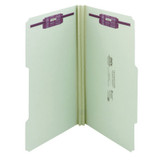
Smead Pressboard Folders, Legal Size, Gray/Green, 1 Expansion, 1/3-Cut Flat Metal Tab, 25/Box


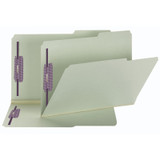

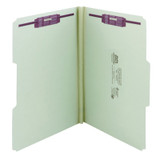

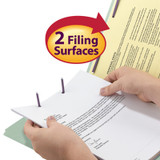

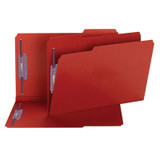
Smead
Smead Pressboard Fastener Folders, Legal Size, 1/3-Cut, 2 Fasteners, Bright Red, 25/Box


Smead
Smead Pressboard Fastener Folders, Legal Size, 1/3-Cut, 2 Fasteners, Blue, 25/Box


Smead
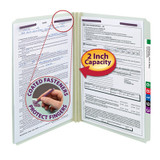
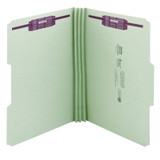
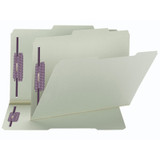
Smead Pressboard File Folder with 2 SafeSHIELD Fasteners, 2/5-Cut Tab ROC Position, Guide Height, Legal Size, Gray/Green



Pressboard File Folders for Heavy-Duty Drawer Filing
Pressboard file folders are heavy-duty top tab folders designed for thick, active, and frequently handled records. Their rigid pressboard covers provide more support than standard paper file folders, while expandable gussets allow the folder to hold large document sets without forcing paperwork into an undersized file.
The pressboard folders in this category are designed for top tab drawer filing in file cabinets, desk drawers, lateral file drawers, and other systems where folder labels are viewed from above. Available options may include letter-size and legal-size folders, expansion capacities up to 3 inches, multiple colors, reinforced gussets, and models with or without document fasteners.
Pressboard folders are commonly used for legal cases, personnel records, medical administration, accounting files, financial reports, construction documents, insurance records, projects, contracts, and other files that require greater capacity and durability than a standard folder.
What Is a Pressboard File Folder?
A pressboard file folder is made with thick, rigid folder stock that helps support heavy document sets and withstand frequent handling. Unlike a standard file folder, which is best suited for lighter paperwork, a pressboard folder is designed for records that may become bulky, remain active for a long period, or be removed and refiled often.
Many pressboard folders include an expandable spine or gusset that increases in width as documents are added. Some models also include built-in fasteners to secure punched paperwork inside the folder.
- Rigid pressboard covers: Provide support for thick and heavy document sets.
- Expandable construction: Allows the folder to grow as additional paperwork is added.
- Top tab design: Keeps the identifying label visible in drawer-filing systems.
- Optional fasteners: Secure punched documents and help preserve page order.
- Durable materials: Better suited to frequent handling and long-term file use than lightweight folders.
When Should You Use a Pressboard File Folder?
Pressboard folders are usually the right choice when a standard file folder is no longer strong enough or does not provide enough capacity. They are especially useful for active files that grow over time or contain heavier document sets.
- Choose pressboard folders for bulky records, thick reports, contracts, case files, and long-term documentation.
- Choose expandable folders when the file will continue to grow as new paperwork is added.
- Choose folders with fasteners when documents need to remain attached and arranged in a specific order.
- Choose folders without fasteners when loose documents must be added, removed, or reorganized quickly.
- Choose colored pressboard folders when departments, projects, record types, priorities, or file status need visual separation.
- Choose legal-size folders when records contain 8-1/2" x 14" contracts, court documents, real estate paperwork, or other legal-size forms.
How to Choose Pressboard File Folders
Letter-size pressboard folders hold standard 8-1/2" x 11" documents. Legal-size folders are longer and are designed for 8-1/2" x 14" contracts, court records, real estate documents, legal forms, and other longer paperwork.
Expansion capacity determines how thick the file can become. Smaller expansions work well for moderately sized records, while folders that expand up to 3 inches are better for large case files, projects, reports, and document sets that continue to grow.
Fasteners hold punched documents securely and help maintain page order. Folders without fasteners provide more flexibility for loose paperwork that must be inserted, removed, copied, or reorganized frequently.
Folder color can identify departments, record types, clients, projects, priorities, years, or workflow stages. Choose one consistent color for a uniform system or use several colors for visual organization.
The gusset forms the expandable spine of the folder. Reinforced or durable gusset materials help support thick files and repeated expansion as documents are added and removed.
Confirm the top tab style provides enough room for the file name, account number, client information, project title, barcode, or color-coded labels used in your filing system.
Pressboard Folders with Fasteners
Pressboard folders with fasteners are designed for records that need both high capacity and structured document organization. The fasteners secure punched pages to the folder covers so paperwork remains in order as the file is reviewed, transported, updated, and returned to storage.
- Preserve page order: Keep forms, reports, contracts, and supporting documents arranged consistently.
- Reduce loose paperwork: Help prevent pages from falling out or becoming mixed with another file.
- Support active files: Add new documents while maintaining an established filing sequence.
- Simplify document review: Turn through attached pages without removing the entire document set.
- Improve file transport: Keep paperwork secured when folders are carried between offices, meetings, or departments.
Fastener count and position vary by product. Review the individual folder specifications to confirm whether fasteners are installed on one cover, both covers, or in another configuration.
How Pressboard Folder Expansion Works
Expandable pressboard folders use a flexible gusset along the bottom or spine that widens as paperwork is added. This allows the covers to remain more parallel and provides better support than forcing a thick file into a standard folder.
- Smaller expansion: Suitable for active files containing a moderate amount of paperwork.
- Larger expansion: Better for lengthy cases, projects, reports, financial records, and document sets accumulated over time.
- Expansion up to 3 inches: Provides substantial capacity for bulky records while keeping related documents together in one file.
- Reinforced gussets: Help support repeated opening, closing, and expansion in high-use filing environments.
Choose the expansion size based on the expected final thickness of the file, not only the amount of paperwork currently being stored.
Common Uses for Top Tab Pressboard File Folders
Top tab pressboard folders are used for drawer-filed records that are too thick, heavy, active, or important for lightweight folder construction.
Store pleadings, discovery, correspondence, contracts, evidence, notes, court documents, and supporting materials in one expandable file.
Organize tax documents, audit records, financial statements, invoices, receipts, payroll reports, and client paperwork.
Hold applications, onboarding documents, benefit forms, performance reviews, training records, payroll documents, and employee correspondence.
Keep proposals, specifications, drawings, contracts, schedules, change orders, approvals, meeting notes, and completion documents together.
Organize billing documents, insurance paperwork, authorizations, forms, correspondence, and other large administrative record sets.
Store policies, applications, claims documents, estimates, photographs, correspondence, approvals, and payment records.
Pressboard File Folders vs. Standard File Folders
Pressboard and standard file folders are both used for drawer filing, but they are designed for different document volumes and levels of use.
Best for routine records containing a smaller amount of paperwork. Standard folders are lighter, more flexible, and usually more economical for everyday office filing.
Best for thick, active, frequently handled, or long-term records that require rigid covers, greater expansion capacity, and more support than a standard folder provides.
Choose a standard folder for lighter daily filing. Choose a pressboard folder when file thickness, document weight, frequent handling, or long-term durability is the greater concern.
Top Tab vs. End Tab Pressboard Folders
Top tab and end tab pressboard folders provide similar heavy-duty construction, but they are designed for different filing systems. The location of the tab determines how the folder is stored and how its label is viewed.
Designed for file cabinets, desk drawers, lateral file drawers, and other drawer-based systems where labels are viewed from above.
You are currently shopping this category.Designed for open-shelf and high-density filing systems where the folder label is positioned along the side edge and viewed from the aisle.
Shop End Tab Pressboard FoldersChoose the tab orientation that matches your filing equipment. A top tab pressboard folder should not be substituted for an end tab folder simply because the size, expansion, color, or fastener configuration is similar.
Pressboard File Folder FAQ
Pressboard file folders are used for thick, heavy, frequently handled, or long-term records that need more support and expansion capacity than standard file folders. Common uses include legal cases, financial records, personnel files, medical administration, projects, contracts, and insurance documents.
Yes. The pressboard folders in this category have top tabs and are designed for drawer filing. The label tab is positioned along the upper edge so it remains visible in a file cabinet, desk drawer, or lateral file drawer.
Expansion capacity varies by product. Some pressboard folders expand up to 3 inches to accommodate bulky records and document sets that grow over time. Check the individual product specifications to confirm the exact expansion.
Choose folders with fasteners when punched documents need to remain secured and arranged in a specific order. Choose folders without fasteners when loose paperwork must be inserted, removed, copied, or reorganized frequently.
Pressboard folders use thicker, more rigid material and are designed for bulky, active, or long-term records. Standard file folders are lighter and better suited to routine files containing a smaller amount of paperwork.
Top tab pressboard folders are designed for file drawers where labels are viewed from above. End tab pressboard folders are designed for open shelves where labels are viewed from the side.