
 USD
USD

Why Traditional Patient Sign-In Sheets Create Privacy Risks
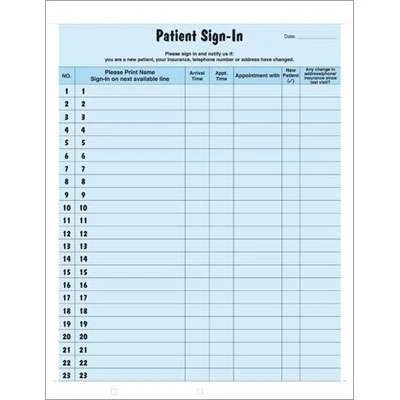
Walk into almost any medical or dental office and you will see a familiar front-desk routine: patients write their names on a sign-in sheet and take a seat.
The process is simple, but a traditional open sheet may leave previously entered names or other information visible to every patient who signs in afterward. That does not automatically make the sign-in sheet improper, but it can create an unnecessary privacy concern.
Confidential patient sign-in forms with removable labels provide a practical way to preserve the familiar check-in process while reducing the amount of patient information left visible in a shared reception area.
How Removable-Label Patient Sign-In Forms Work
Instead of writing directly on an exposed running list, each patient enters the requested information on the next numbered adhesive label. Front-desk staff then removes the completed label, leaving the patient’s information concealed from the next person who uses the form.
The process generally works as follows:
- The patient signs in on the next available numbered label.
- The patient keeps the corresponding numbered tab.
- Front-desk staff removes the completed label.
- The label is attached to the patient chart, routing slip or other office record according to established procedures.
- The concealed section helps prevent completed patient information from remaining visible on the form.
This approach maintains an easy check-in process without requiring new software, hardware or extensive employee training.
Are Patient Sign-In Sheets Allowed Under HIPAA?
Yes. HIPAA does not prohibit medical offices from using patient sign-in sheets, nor does it require one particular type of sign-in form.
The U.S. Department of Health and Human Services explains that healthcare providers may use patient sign-in sheets when the information disclosed is appropriately limited and reasonable safeguards are in place. A sign-in sheet should not request unnecessary medical information, such as the reason for the patient’s appointment.
Removable-label forms can support those safeguards by limiting the information visible to other people in the waiting room. However, no individual form can make an office HIPAA compliant by itself. These forms should be used as part of the organization’s complete privacy policies, procedures and staff training.
Why Offices Replace Traditional Open Sign-In Sheets
Many practices update their sign-in process before a patient complaint or privacy incident occurs. Common concerns include:
- Patients seeing the names of people who checked in earlier
- Unnecessary information remaining visible at the front desk
- Questions raised during an internal privacy review
- Staff discomfort with maintaining an exposed patient list
- The need for a more organized daily check-in record
A removable-label sign-in form addresses these concerns without disrupting the familiar front-desk workflow.
Choosing the Right Patient Sign-In Form
Healthcare offices have different patient volumes, language needs and recordkeeping procedures. When choosing a form, consider the following options:
- Package quantity: Choose 125 forms for a smaller practice or 250 forms for a higher-volume office.
- Color: Available choices include blue, green and pink.
- Language: English/Spanish bilingual forms are available in blue.
- Recordkeeping: Two-part forms create a confidential duplicate record of patient visits.
- Workflow: Confirm how removed labels will be routed, filed or attached to patient records.
You can compare available patient sign-in forms, colors and package quantities to find the best option for your office.
A Small Front-Desk Change That Supports Patient Privacy
Patients expect discretion when they visit a medical, dental or specialty practice—particularly when the reason for the appointment may be sensitive.
Replacing an exposed sign-in list with a confidential removable-label format is a relatively simple improvement. It helps reduce unnecessary visibility, keeps the check-in process organized and shows patients that their privacy is taken seriously.
Update Your Patient Check-In Process
Shop confidential patient sign-in forms with removable labels, bilingual formats and quantities for practices of different sizes.
Shop Patient Sign-In Forms