 USD

File Folders Explained: Types, Uses & Buying Guide

File Folders Explained: Top Tab, End Tab, Classification & Many More!
I take a lot of phone calls that start with, “We still use old-fashioned file folders. Do you carry those?”
Absolutely. And there's nothing wrong with that. File folders remain one of the simplest, most practical ways to organize and manage important paperwork.
The key is choosing the right folder for the job. Top tab, end tab, classification, and specialty folders all serve different purposes. Once you understand the differences, finding the right one is pretty straightforward.
Let's take a look at the different types of file folders and where they work best.
What Is a File Folder?
A file folder is a folded paperboard or pressboard product designed to hold, organize, and protect paper documents. Most folders have a tab for identification, allowing records to be arranged alphabetically, numerically, by subject, or according to another filing method.
While the basic function is the same, file folders vary in construction, thickness, tab placement, expansion capacity, and available features.
The right choice depends on how your files are stored, how frequently they're accessed, and how much paperwork each folder needs to hold.
Top Tab File Folders: Traditional Drawer Filing
Top tab file folders are among the most commonly used filing supplies in offices. As the name suggests, the identification tab is located along the top edge of the folder.
They're designed primarily for vertical filing drawers, desktop organizers, and many hanging folder systems, where the tabs can be read from above.
Common Uses
-
General office paperwork and correspondence
-
Employee and personnel records
-
Customer and vendor files
-
Accounting and financial documents
-
School and administrative records
Top tab folders are available in manila, assorted colors, kraft stock, and heavier pressboard materials. Depending on the product, you'll also find different tab positions, straight-cut tabs, reinforced edges, and fastener options.
Why choose them? They're economical, familiar, easy to label, and well suited for everyday filing.
If your office uses conventional file cabinet drawers, top tab folders are often the most practical starting point.
Browse our selection of Top Tab File Folders to compare available styles, sizes, and materials.
End Tab File Folders: Designed for Open-Shelf Filing
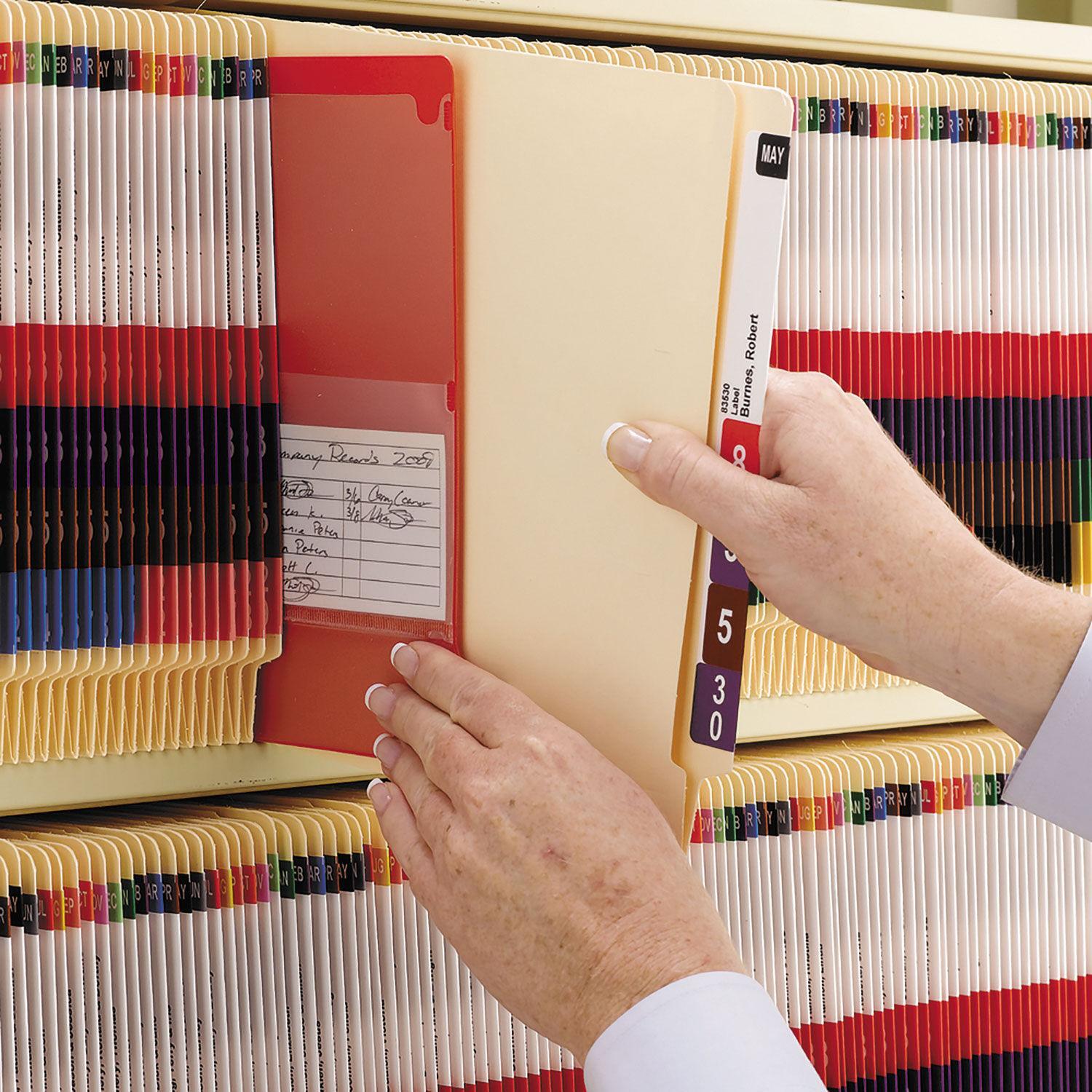
End tab file folders, sometimes called side tab folders, have the identification tab positioned along the side of the folder rather than the top.
This design makes them especially useful in open-shelf filing systems, where folders are stored with their spines facing outward.
End tab filing is common in medical offices and other businesses that maintain large numbers of records and need quick access to individual files.
Common Uses
-
Medical and patient records
-
Dental and veterinary offices
-
Legal files and case records
-
Insurance and financial records
-
High-volume records departments
End tab folders are frequently paired with color-coded alphabetical, numerical, or year labels. This makes it easier to locate individual files and visually identify records that may have been filed in the wrong location.
For organizations working with hundreds or thousands of active records, a properly designed end tab filing system can be an efficient way to manage shelf space and improve file retrieval.
Why choose them? End tab folders provide excellent visibility in shelf-based systems and work particularly well with color-coded filing labels.
Explore our End Tab File Folders for manila, colored, expandable, and specialty options.
Classification Folders: Organizing Multiple Sections in One File
Not every record fits neatly into a standard folder.
Some files contain contracts, correspondence, invoices, reports, and supporting documents that need to stay together while remaining separated by subject.
That's where classification folders are particularly useful.
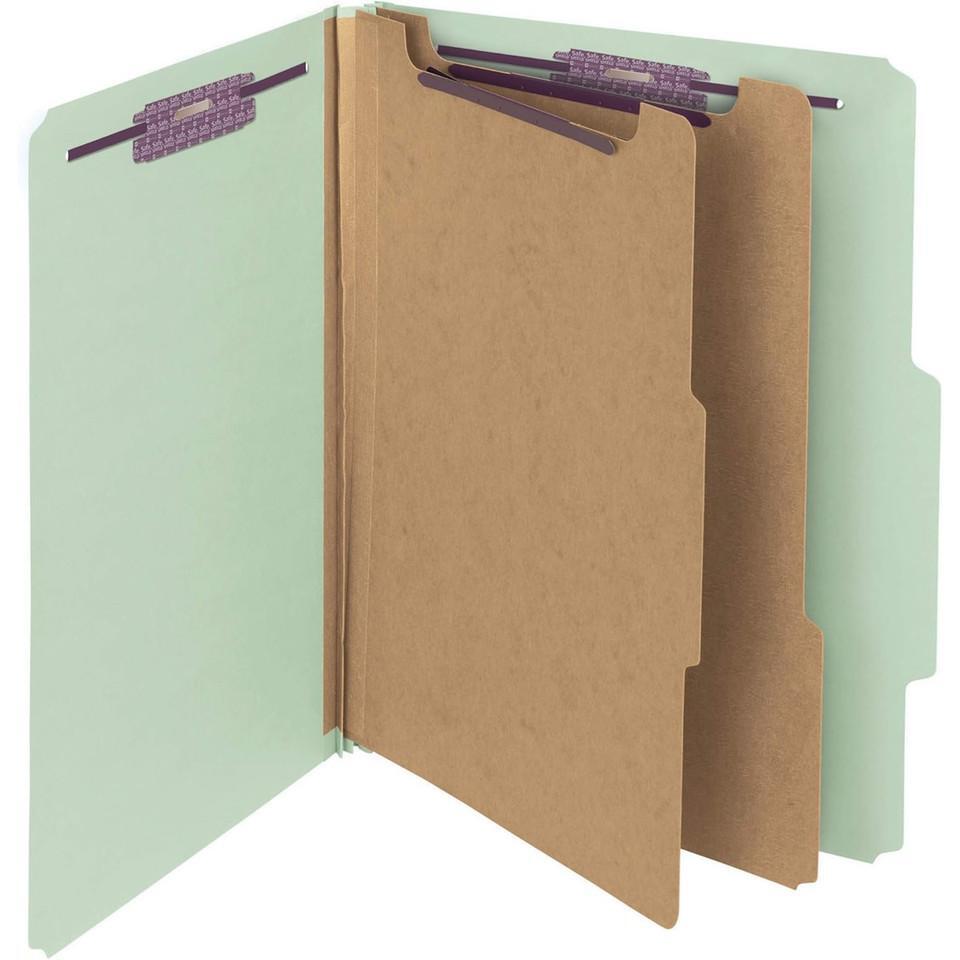
Classification folders are generally constructed from heavier materials, such as pressboard, and contain internal dividers that create multiple filing sections. Many designs also include bonded fasteners to secure paperwork in place.
Rather than maintaining several individual folders for the same customer, employee, or project, a classification folder can keep related information together in one organized file.
Common Uses
-
Legal case files and supporting documents
-
Employee and human resources records
-
Mortgage and loan documentation
-
Insurance claim files
-
Project management and contract records
-
Government and administrative records
For example, an employee personnel file might contain separate sections for employment documents, performance reviews, benefits information, and other administrative records.
Classification folders help prevent documents from becoming mixed together and make it easier to locate a specific section when needed.
Why choose them? They're durable, structured, and particularly helpful for large or detailed records that require internal organization.
We carry Classification Folders in top tab, end tab, and hanging configurations to accommodate different filing systems.
Other Types of File Folders Worth Knowing
Beyond the three primary styles, there are several specialty folders designed for particular filing requirements.
Expanding File Folders
Expanding folders have gusseted sides or bottoms that allow them to hold thicker collections of documents. They're useful when a standard folder doesn't provide enough capacity.
Hanging File Folders
Hanging folders use metal or plastic support rails to hang from file drawer frames. They're commonly used to organize files in cabinets and can hold individual interior folders.
File Folders with Fasteners
Fastener folders include built-in metal prongs or other fastening mechanisms to keep punched documents secured. They're especially useful when paperwork must remain in a particular order.
Pressboard File Folders
Pressboard folders are made from a thicker, more rigid material than ordinary lightweight file folders. They're a good choice for records that receive frequent handling or require additional durability.
File Jackets
File jackets typically have closed sides that help prevent loose papers, receipts, and smaller documents from slipping out. They're useful for records that contain materials that cannot easily be fastened.
Each style serves a different purpose. There's no reason to pay for a heavier or more specialized folder if a standard manila folder will handle the job. Likewise, choosing the least expensive folder isn't necessarily a savings if it needs frequent replacement or doesn't properly support the filing system.
Top Tab vs. End Tab vs. Classification Folders: Which Is Best?
The easiest way to choose is to consider how the records will be stored and used.
| Folder Type | Best For | Main Advantage |
|---|---|---|
| Top Tab | Traditional drawers and everyday office files | Simplicity and affordability |
| End Tab | Open-shelf systems and high-volume records | Side-facing identification and efficient retrieval |
| Classification | Complex or multi-section records | Internal organization and document separation |
| Expanding | Large or growing document collections | Additional storage capacity |
| Hanging | Drawer-based filing systems | Organized support within file drawers |
| Fastener Folders | Documents that must remain in sequence | Keeps paperwork securely attached |
It's also important to understand that these features can overlap. For instance, a classification folder can have either a top tab or an end tab, and both types of folders may be available with fasteners or expansion.
The best folder isn't necessarily the most expensive or the most elaborate. It's the one that fits your existing system and makes it easier for people to do their jobs.
What to Consider Before Buying File Folders
Before placing an order, I recommend paying attention to a few basic details.
1. Letter or legal size?
Make sure the folder is designed for the documents you're storing. Legal-size folders accommodate longer documents, while letter-size folders are appropriate for standard 8½" × 11" paperwork.
2. Tab style and position
Determine whether your filing system requires top tabs or end tabs. For top tab folders, consider whether you need straight-cut, left, center, or right tab positions.
3. Material and durability
Standard manila folders work well for general use. Heavier pressboard and reinforced folders may be a better investment for records that receive frequent handling.
4. Expansion capacity
If files grow substantially over time, choose folders designed to accommodate the additional paperwork without becoming overfilled.
5. Fasteners and dividers
Consider whether documents need to be secured or separated into sections. This can be particularly important for legal, medical, personnel, and financial records.
6. Compatibility with your current filing system
If you're replacing existing folders, check the dimensions, tab style, label placement, and any other specifications before ordering. Consistency is important, especially in established color-coded filing systems.
Why Buy File Folders from Advanced Filing Concepts?
There are plenty of places to purchase basic office supplies. However, when it comes to maintaining an established filing system or finding folders designed for a specific application, product selection and experience matter.
Advanced Filing Concepts has been serving customers since 1984, and filing supplies have been a central part of our business from the beginning.
We offer more than standard manila folders. Our selection includes top tab and end tab folders, classification folders, specialty filing products, and supplies designed for professional records management.
We understand that customers aren't always starting a filing system from scratch. Often, they're trying to match a folder they've used for years, locate a particular tab configuration, or find a replacement for a product that's become difficult to obtain.
That's where knowing the products and understanding how filing systems work makes a difference.
We're also proud to offer American-made file folders, with many of our filing products manufactured in the USA. Country of origin can vary by manufacturer and item, so it's worth checking the individual product when domestic manufacturing is a purchasing requirement.
Whether you're purchasing a single box of folders or stocking an entire records department, our goal is to help you find the right product without making the process more complicated than it needs to be.
Find the Right File Folders for Your Business
A good filing system doesn't have to be complicated. It simply needs to be consistent, easy to maintain, and designed around how your organization stores and retrieves information.
Choosing the correct folder is one of the easiest ways to make that happen.
If you're looking for standard office folders, specialized medical filing products, or heavy-duty classification folders, take a look at our complete selection of File Folders at Advanced Filing Concepts.
And if you're unsure which folder matches your existing system, we're happy to help you narrow down the options.