
 USD
USD

Expandable File Folders Explained: Pockets, Accordion Folders, Wallets & More
Expandable File Folders Explained: Pockets, Accordion Folders, Wallets & More
Published October 27, 2026
If your standard file folder is starting to look like it swallowed a phone book, it is probably time to stop forcing it. That is exactly what expandable file folders are for. They give thick files room to grow without turning the folder into a bent, split, overstuffed mess.
But “expandable folder” is a broad term, and there are several very different styles of file folder hiding underneath it. An expanding file pocket is not the same thing as an accordion folder. A file wallet solves a different problem than a cloth expandable folder. If you are buying for legal records, medical files, accounting paperwork, school records, or active office files, picking the right style makes a real difference.
First: What Is an Expandable File Folder?
An expandable file folder is designed to hold more paper than a standard flat folder. Instead of staying nearly the same thickness, the sides or gussets expand as documents are added.
That makes them especially useful for:
- Thick client or case files
- Contracts and legal documents
- Medical and insurance records
- Tax and accounting paperwork
- Project files that continue growing
- Real-estate documents
- Receipts, statements, and supporting paperwork
The important part is choosing the right construction for the job.
Expanding File Pockets: Best for One Big File
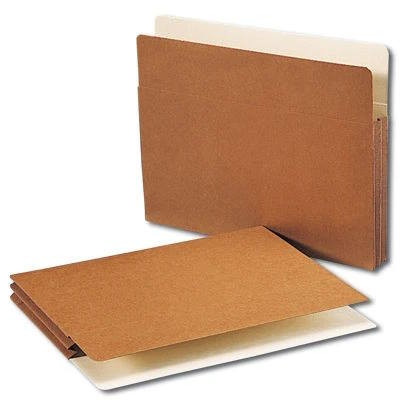
An expanding file pocket is usually the simplest option. Think of it as one large compartment with expandable sides.
This style works especially well when all of the paperwork belongs together and does not need to be split into separate sections. A large client file, thick report, property file, legal matter, or growing project can all live in one pocket without being divided up.
Accordion Folders: Best When One File Needs Multiple Sections
Accordion folders are a different animal. They expand, but they also contain multiple internal sections for separating paperwork inside the same organizer.
They are typically enclosed on three sides, which helps keep loose papers contained while still giving you quick access from the top.
They are useful for:
- Different stages of one project
- Monthly statements
- Receipts by category
- Multiple case sections
- Household or business records grouped by subject
- Documents that need to travel without spilling everywhere
File Wallets: Good When You Need More Containment
File wallets add another useful feature: closure.
Instead of leaving the top completely open, file wallets use flaps to help contain the contents. Some styles also use elastic or other closure methods. They are a good fit when documents move between offices, meetings, classrooms, courtrooms, job sites, or vehicles.
Cloth Expandable Folders: For Files That Take a Beating
Some records are opened once in a while. Others get pulled, handled, transported, stuffed, restuffed, and put back every single day.
For those heavier-use environments, cloth expandable folders can provide stronger expandable construction and reinforcement where ordinary paper gussets may wear more quickly.
Desk File Sorters: When the File Needs to Stay in Front of You
Not every expandable filing product belongs in a drawer. Desk file sorters are designed for active paperwork that needs to stay visible and easy to reach. They work well for incoming documents, forms waiting for action, current projects, mail, invoices, or anything else that tends to disappear the moment it gets buried in a drawer.
File Storage Boxes: When a Folder Just Is Not Big Enough
Sometimes the answer is not a bigger folder. It is a box.
File storage boxes make sense when you need to move or store a larger collection of records together. They can be especially useful when portability matters or when the volume of paperwork has simply outgrown folder-sized storage.
Letter Size or Legal Size?
Letter-Size Expandable File Folders
Best for standard office paperwork, reports, invoices, statements, forms, and general business records.
Legal-Size Expandable File Folders
Best for contracts, legal documents, real-estate paperwork, case files, and longer forms.
If a file contains even a few legal-size documents, check the product dimensions before ordering. Trying to make legal paperwork live in a letter-size folder usually ends with curled edges, folded pages, and somebody eventually swearing at the file cabinet.
Open Top, Flap Closure, or Enclosed Sides?
One of the biggest differences between expandable filing products is how much of the file is enclosed. That affects how easy the contents are to access, how well loose papers stay contained, and how practical the folder is to carry from one place to another.
Expanding file pockets are generally open at the top, making them easy to load and unload when you are working with one thick record or document set.
Accordion folders are enclosed on three sides and use multiple internal sections, which helps keep loose papers separated and contained inside one organizer.
File wallets add flaps or other closure features, making them a better choice when paperwork needs a little more protection during storage or transport.
If the file mostly stays in a drawer, quick access may matter most. If it moves between offices, meetings, classrooms, or vehicles, enclosed sides or a flap closure can make a lot more sense.
How Much Expansion Do You Actually Need?
More is not automatically better.
A folder that expands several inches can be useful for a very thick record, but it may be unnecessary for a file that only needs modest extra capacity. Look at the current thickness of the record, then leave some room for growth.
One Easy Way to Choose
- One thick file: choose an expanding file pocket.
- Multiple sections inside one organizer: choose an accordion folder.
- Need flaps or more containment: choose a file wallet.
- Heavy daily use: consider a cloth-reinforced expandable folder.
- Needs to stay visible on a desk: use a desk file sorter.
- Too much paperwork for a folder: move up to a file storage box.
Do Not Forget Where the Folder Has to Live
One last thing that gets overlooked: a folder can expand farther than the drawer, shelf, cabinet, or box it is supposed to fit inside.
Before buying, check:
- Letter or legal size
- Maximum expansion
- Overall folder dimensions
- Number of compartments or internal sections
- Fasteners, flaps, or closure style
- Material and reinforcement
- Package quantity
The Bottom Line
Expandable file folders are not complicated, but the terminology can make them sound that way. The real question is simply what you need the folder to do.
If you need one large compartment, start with an expanding file pocket. If you need multiple sections with enclosed sides, look at accordion folders. If you need a flap closure, consider file wallets.
Or browse the full selection of expandable file folders and compare size, construction, expansion, and organization style.
Trying to Match a Folder You Already Use?
Send us the manufacturer number, dimensions, expansion capacity, material, and a photo if you have one. We can usually get you pointed in the right direction.
Contact Advanced Filing Concepts