
 USD
USD

Paper Thickness Explained: Points vs Pounds (Office Industry Guide)
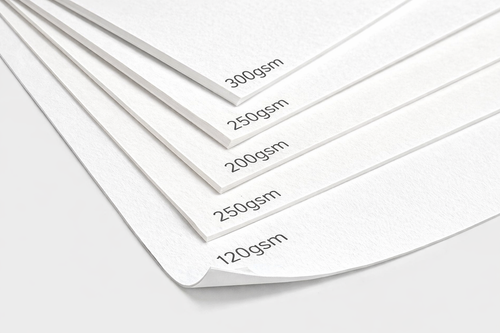
Paper Weight Explained - Points vs Pounds (Simple Guide)
If you have ever tried to compare paper weights and felt like it makes no sense, you are not crazy. This guide breaks it down the simple way.
Quick takeaway:
- Point (pt) is thickness. 1 pt = 0.001 inch.
- Pound (lb) is basis weight and depends on paper type (bond vs text vs cover vs index).
- If you want apples to apples, ask for caliper (thickness) or points.
Jump to:
What is a point?
What does “pound” mean?
Point thickness anchors
Office paper charts by type
Filing and folder standards
Quick equivalents
FAQ
What Is a “Point”?
When we talk about points, we are talking about thickness. This is the clean measurement that does not play games.
1 point = 0.001 inch. So 10 point is 0.010 inch. 14 point is 0.014 inch. In the filing industry, this matters because a folder has to hold up to real use, not just look nice on a spec sheet.
What Does “Pound” Paper Mean?
The pound rating is basis weight. It is not thickness. It is the weight of a set quantity of paper in its original sheet size before it is cut down.
Here is the trap: bond, text, cover, and index all use different base sizes. So you cannot compare “80 lb” across categories like it is one universal scale. That is why 110 lb index is not the same thing as 110 lb cover.
Point Thickness Anchors (Simple Reference)
| Points | Thickness (inches) | Thickness (mils) |
|---|---|---|
| 4 pt | 0.004" | 4 |
| 6 pt | 0.006" | 6 |
| 8 pt | 0.008" | 8 |
| 10 pt | 0.010" | 10 |
| 11 pt | 0.011" | 11 |
| 14 pt | 0.014" | 14 |
| 18 pt | 0.018" | 18 |
| 25 pt | 0.025" | 25 |
Office Paper Charts by Type (Real-World Ranges)
These are typical ranges. Different mills and finishes can vary, but this gets you in the right ballpark fast.
Bond / Writing (Copy Paper, Letterhead)
| Bond (lb) | Common Use | Typical Thickness |
|---|---|---|
| 20 lb | Standard copy | 3.5 to 4 pt |
| 24 lb | Better copy / laser | 4.3 to 4.8 pt |
| 28 lb | Letterhead / resumes | 5.0 to 5.8 pt |
| 32 lb | Premium letterhead | 6.0 to 7.0 pt |
Text / Book (Brochures, Manuals)
| Text (lb) | Common Use | Typical Thickness |
|---|---|---|
| 60 lb | Brochures / booklets | 3.8 to 4.6 pt |
| 70 lb | Nicer brochures | 4.5 to 5.3 pt |
| 80 lb | Premium brochures | 5.2 to 6.2 pt |
| 100 lb | Heavy brochure stock | 6.8 to 8.0 pt |
Cover / Cardstock (Report Covers, Presentation Materials)
| Cover (lb) | Common Use | Typical Thickness |
|---|---|---|
| 65 lb | Light cardstock | 7 to 9 pt |
| 80 lb | Standard cover | 9 to 11 pt |
| 100 lb | Heavy cover | 12 to 14 pt |
| 110 lb | Extra heavy | 14 to 16 pt |
Index / Tag (Dividers, Tabs, Inserts)
| Type | Common Use | Typical Thickness |
|---|---|---|
| 90 lb index | Lighter dividers | 7 to 9 pt |
| 110 lb index | Standard dividers | 9 to 11 pt |
| 140 lb index | Heavy dividers | 12 to 14 pt |
One more thing: some papers are more compressed than others. Two sheets can share the same “lb” rating and still feel different in stiffness and thickness. If it needs to match an existing product, ask for caliper or points.
Filing and Folder Standards (What You Actually See in Offices)
- 11 pt: Standard file folders (flexible, everyday use)
- 14 pt: Heavier duty folders (stiffer, better for high-use environments)
- 18 pt: Extra heavy folders (for demanding environments)
- 25 pt pressboard: Classification folders (rigid, built for long-term records)
Quick Equivalents People Ask For
- 20 lb bond ≈ 4 pt
- 24 lb bond ≈ 4.5 to 5 pt
- 65 lb cover ≈ 8 pt
- 80 lb cover ≈ 10 pt
- 100 lb cover ≈ 12 to 14 pt
- 110 lb cover ≈ 14 to 16 pt
- 110 lb index ≈ 10 pt
FAQ
Is 24 lb paper thicker than 80 lb paper?
Not necessarily. 24 lb is usually bond. 80 lb could be cover or text. Different category, different measuring system.
What should I use if I want stiffness, not just weight?
Ask for points or caliper. That tells you the thickness. Stiffness also depends on how the paper is made, but thickness gets you close fast.
Where does GSM fit in?
GSM is grams per square meter. It is a more consistent system across paper types than US lb ratings. If you are comparing products internationally, GSM is usually the cleanest reference.
If you are trying to match an existing folder, divider, or cover stock, the quickest way is to compare points (or caliper). That avoids surprises.